Hypertension in Kenya
Why Community Health Nurses Are the First and Last Line of Defence
- June 24, 2026
- Auscare International College
- 8 Min Read
26% - 30%
of adults live with hypertension
0.2
physicians per 1,000 people in Kenya
50%+
of hospital deaths are from non-communicable diseases
Millions
are at risk without knowing it
It kills without warning. No dramatic moment, no obvious crisis. Hypertension earns the name ‘silent killer’ honestly and in Kenya, the silence is particularly costly.
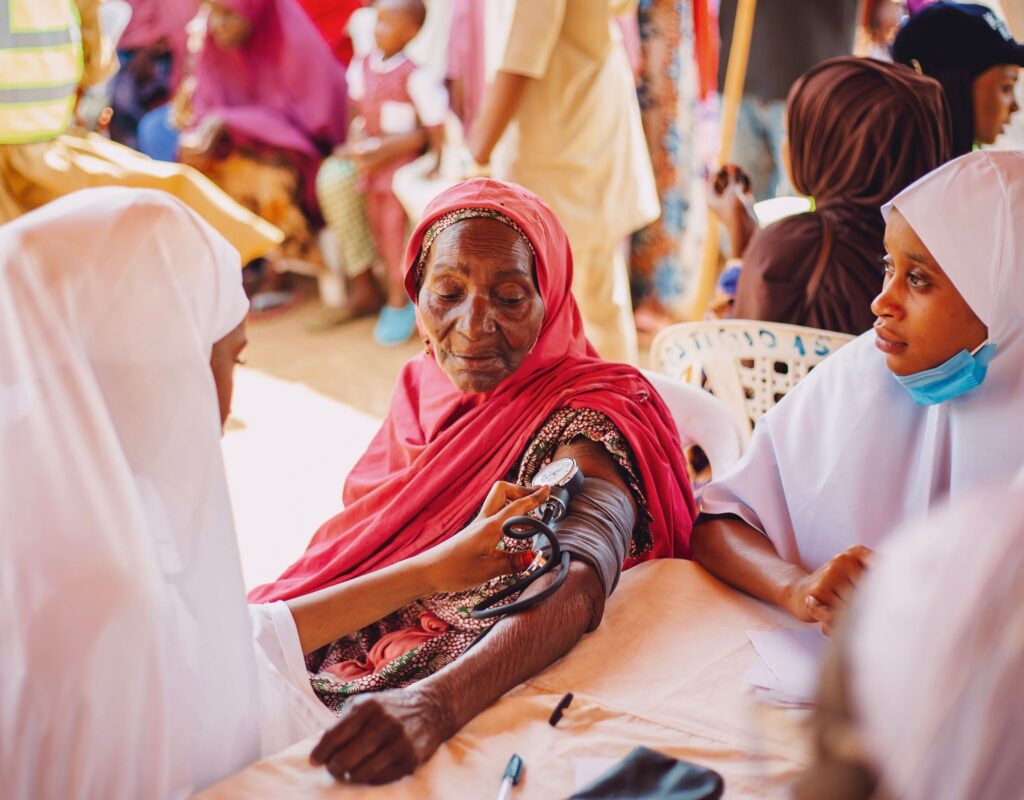
An estimated 26 to 30 percent of Kenyan adults live with hypertension. The majority do not know. They have never been screened. Year by year, sustained vascular pressure quietly damages kidneys, strains hearts and raises stroke risk to a degree that would alarm them; if only someone had told them. That someone, in Kenya’s healthcare architecture, is the community health nurse.
The Growing Burden of Hypertension in kenya
Non-communicable diseases now account for over 50% of hospital dates in Kenya with hypertension at the center of that crisis
- Leading risk factor for stroke, heart failure and chronic kidney disease
- 0.2 doctors per 1,000 people mostly in Nairobi in Mombasa
- Many in a rural areas have no access to specialist care
- Community health nurses bridge discreetical gap
At a Glance
- Hypertension is often silent but deadly
- Community health nurses detect easily
- They educate, follow up and save lives
- Prevention today means a health society tommorow
The Scale
Non-communicable diseases account for over 50 percent of hospital deaths in Kenya. Hypertension drives that burden directly and as the primary risk factor for stroke, heart failure and chronic kidney disease.
With 0.2 physicians per 1,000 people , mostly concentrated in Nairobi and Mombasa; a patient in Garissa or Marsabit with uncontrolled hypertension is unlikely to reach a cardiologist in time. They may, however, have access to a community health nurse.
What 'First Line of Defence' Means in Practice
First Line of defence
Community nurses go to the people.
- Blood Pressure screening during home visits and community days
- Identifying high risk individual
- Tracking treands over time
- Educating and empowering patients
- Referrals and fllow-up
- Lifestyle modification support
The Medication Adherence Problem
Medication work, but patients often stop
- No symptoms = low urgency
- Side effects, cost and myths cause non-adherence
- Nurses identify barriers and provide solutions
- Follow-uo saves lives
Salt Reduction; Counseling Done Right
We don't just say "reduce salt", we show how.
- Understand what families cook
- Discuss ugali, Pilau, Sauces and hidden sodium
- Involve the person who cooks
- Practical, cultural, repeated education
Hypertension rarely produces symptoms until damage has already been done.
-Community Health Nurse.
The community nurse does not wait for patients to present with symptoms. Hypertension rarely produces symptoms until it has caused damage. She brings the screening to them.
- Population-level blood pressure screening during household visits and community health days.
- Identifying who has never been tested and ensuring baseline readings are taken.
- Recognising risk categories — age above 40, family history, obesity, diabetes, smoking.
- Recording trends across multiple visits, not isolated readings.
- Educating patients on why treatment matters even when they feel well.
- Facilitating referral and following up on medication adherence.
- Supporting lifestyle modification; dietary salt reduction, activity, alcohol reduction- with culturally specific counselling.
Lorem ipsum dolor sit amet, consectetur adipiscing elit. Ut elit tellus, luctus nec ullamcorper mattis, pulvinar dapibus leo.
The Medication Adherence Problem
Antihypertensive drugs work. The problem is that patients stop taking them. Hypertension produces no symptoms when controlled and no immediate consequence when a dose is missed. A patient who feels well stopping a tablet with side effects is making a rational-seeming, clinically dangerous decision.
The community nurse closes this feedback loop. She monitors trends, identifies who has stopped, explores why; cost, side effects, a belief the condition was cured and addresses the specific barrier. This follow-up function is something no hospital-based system can replicate at population scale.
Salt Reduction Counselling Done Right
Antihypertensive drugs work. The problem is that patients stop taking them. Hypertension produces no symptoms when controlled and no immediate consequence when a dose is missed. A patient who feels well stopping a tablet with side effects is making a rational-seeming, clinically dangerous decision.
The community nurse closes this feedback loop. She monitors trends, identifies who has stopped, explores why; cost, side effects, a belief the condition was cured and addresses the specific barrier. This follow-up function is something no hospital-based system can replicate at population scale.
Reduce your salt’ is advice most patients nod at and ignore. Community nurse counselling is specific to the household. sitting in the kitchen, understanding what is actually cooked, discussing ugali preparation, pilau seasoning, commercial sauces and the hidden sodium in urban diets. It involves the person who actually cooks. This is health education as it needs to happen: practical, culturally embedded and repeated across visits.
Kenya
A reading above 180/120 mmHg with any of these signs is a hypertensive emergency: severe occipital headache, visual disturbance, chest pain, neurological symptoms (slurred speech, facial droop, limb weakness), or nausea and vomiting. The nurse’s response is immediate referral; not a follow-up visit tomorrow.
Kenya’s hypertension burden will not be solved by building more hospitals. It will be solved by reaching people before their silent condition becomes a stroke. The community health nurse is how that happens.
Auscare International College — School of Nursing in Mombasa trains graduates for exactly this front-line role — clinically prepared and community-ready.
When to Escalate
A BP above 180/120 mmHg with any of the following is an emergency
- Severe headache
- Visual Disturbance
- Chest pain
- Slurred speech
- Facial Droop
- Limb Weakness
- Nausea & Vomiting
- Immediate referral can save a life.

The Future is in Prevention
Kenya and the world will not solve its hypertension crisis by building more hospitals.
It will be solved by reaching people before their silent condition becomes a stroke.
The community health nurse is how that happens.
Build the Career the World Needs
Join Auscare International College– School of Nursing in Mombasa and become a skilled, compassionate nurse ready to transform comunities.