ARTICLE:
The Global Nursing Shortage Explained: Why Kenya Is Perfectly Positioned to Fill It
There is a number that does not appear in Kenyan nursing prospectuses but probably should: 13 million. That is the WHO’s estimate of the global nursing and midwifery workforce gap. The shortfall is not evenly distributed; but its consequences ripple into high-income countries experiencing their own critical nursing deficits. Australia, the UK, Canada, the Gulf states; the list of nations actively recruiting internationally trained nurses is long and growing.
Kenya sits in a position of unusual strategic advantage. Here is why.
Why High-Income Countries Are Running Short
Australia’s nursing shortage is structural, not cyclical. An ageing population is driving demand upward while the nursing workforce itself ages toward retirement. The Royal Commission into Aged Care Quality and Safety mandated minimum staffing ratios that domestic training pipelines cannot currently meet. COVID-19 accelerated burnout and attrition. The gap is real, funded and urgent.
Why Kenyan Nurses Are in Demand
- English proficiency — Kenya’s English-medium education system removes the language barrier that limits many internationally trained nurses.
- Clinical adaptability — nurses trained in high-volume, limited-resource Kenyan settings bring resilience and diagnostic skill that hospital systems value.
- Community health competency — aged care and community health services specifically need nurses who can assess patients in home environments, manage chronic conditions independently, and work with clinical autonomy. This is exactly what community health nursing training produces.
- KNC-aligned qualifications — the Kenya Nursing Council regulates training to standards that provide a foundation for assessment by AHPRA (Australia), NMC (UK), and equivalent bodies in Canada and the Gulf.
The International Pathway
- Complete a KNC-recognised qualification such as the Diploma in Community Health Nursing.
- Apply to AHPRA for skills assessment — reviewing curriculum content, clinical hours and competencies.
- Complete English language testing (IELTS or OET) — achievable for Kenyan graduates with focused preparation.
- Complete any bridging programme or supervised practice period required by the assessment outcome.
- Register with AHPRA and apply for positions through Australia’s skilled worker visa programmes.
This is a structured pathway with clear steps. Not a shortcut — but a genuine and navigated route that Kenyan nurses are successfully using.
The Salary Context
- Kenya (public sector): KES 480,000–960,000 annually.
- Australia (Registered Nurse): AUD 65,000–90,000 — approximately KES 5–7 million.
- UK (NHS): GBP 28,000–40,000 — approximately KES 4.5–6.5 million.
- Gulf states (tax-free): USD 20,000–40,000 plus accommodation — approximately KES 2.6–5 million.
The differential is significant. The pathway requires investment in qualification, registration, and preparation. For those who complete it, the outcome is a life-changing shift in professional and financial circumstance.
The Timing Matters
To reduce Global nursing shortage, the nurses filling those international roles are being trained right now. The WHO’s projections are based on demographic trends already in motion. The opportunity is not a future possibility; it is a current reality that healthcare systems across multiple countries are navigating today.
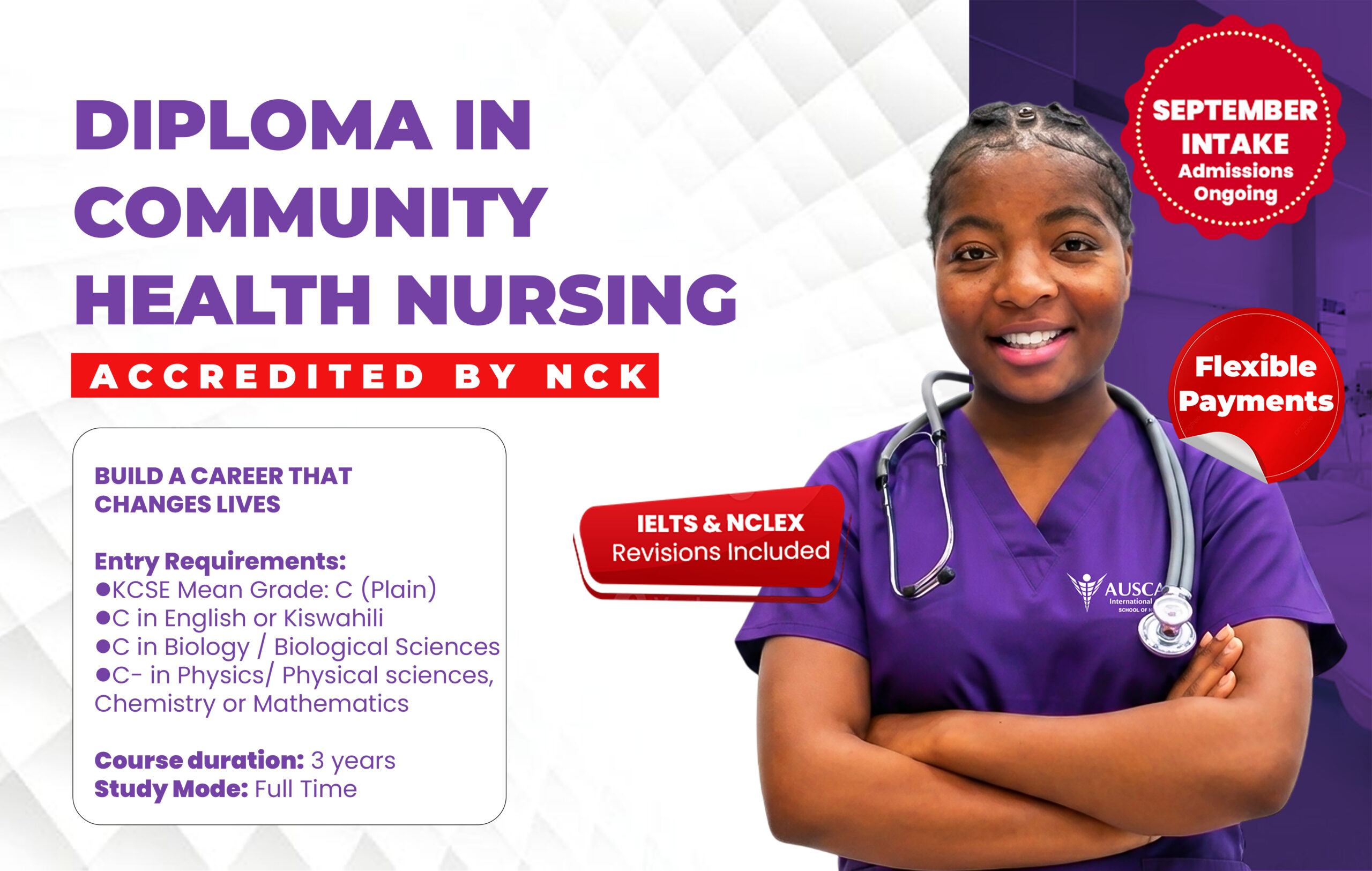
The Diploma in Community Health Nursing at Auscare International College, School of Nursing in Mombasa positions graduates for both the Kenyan public health system and the international pathway; with the clinical skills and community health competencies that both require.